


Now everyone is back from their summer break, the AGLAIA Sign of the Week campaign resumes with the term “Oil lamp”. A search in the ARIADNE Catalogue using the Getty AAT Subject filter reveals 182 resources from across Europe and Japan, from early man to modern day.

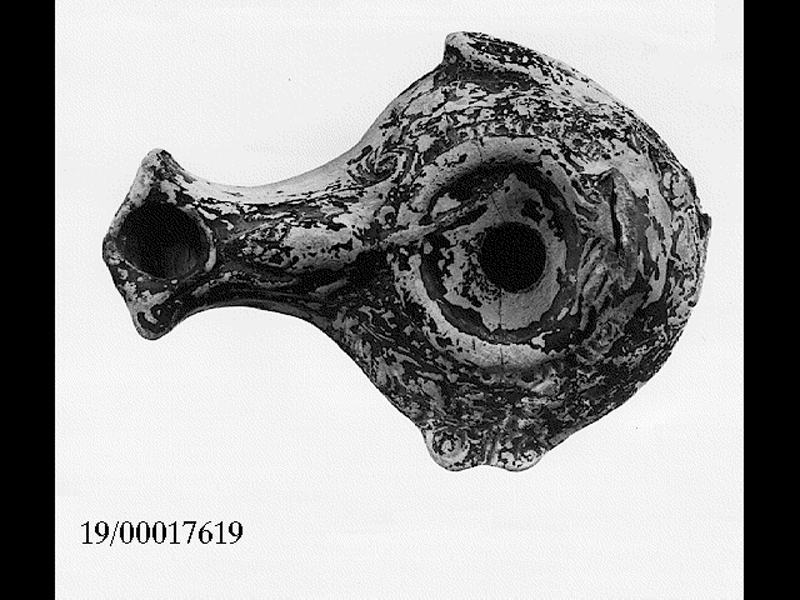
Oil lamps have been used to provide illumination for over 10,000 years. The first known examples are shells and stones with hollows from the Late Paeleolithic era that would contain animal fat (tallow) with wicks made from flammable materials such as dried moss and plants and wood.
From around 3000-500 BCE, ancient civilisations evolved in Mesopotamia, Egypt, and the Levant with clay being used for ceramics and building materials. The development of farming lead to the increasing use of olive oil in pottery lamps.
The Greeks and Romans (-500 BCE-500 CE) revolutionised lamp manufacturing, turning them into everyday household items as well as artistic objects. Most significantly, moulds were used to create reservoirs for the oil to stop it spilling and with integrated spouts. The flat tops of the lamps were often richly decorated. While common citizens used terracotta, wealthy elites displayed their status using ornate bronze, brass, or multi-nozzle metal lamps that burned substantial amounts of fuel.
As the Roman Empire disintegrated, giving way to the Middle Ages and Byzantine Era (500-1500 CE), lamp styles diversified regionally. In the Middle East, Islamic glassmakers perfected the “mosque lamp”—large, suspended glass vessels decorated with intricate calligraphy and filled with oil and floating wicks to cast ambient light. In parts of medieval Europe, domestic oil lamps grew simpler, often taking the form of crude iron pans or stone bowls, as tallow candles became a common alternative for the poor.
From around 1600-1800 CE (Early Modern Era) increased global maritime trade in whale oil brought new, highly efficient fuels that altered domestic illumination. Companies like the Sandwich Glass Factory began mass-producing elegant, clear glass table lamps to showcase the premium oil inside.
The Industrial Revolution (1780-1900 CE) also had an impact on oil lamps – engineered versions made from metal and glass began to appear on the market. As the whale oil industry collapsed due to over-fishing, kerosene became the fuel of choice.
The final nail in the coffin for the oil lamp was the development of the electricity supply – the oil lamp was ultimately relegated to a decorative ornament, a cultural artefact, or an emergency backup light source.
Visit the ARIADNE YouTube Channel for the AGLAIA Sign Language Glossary.